Article from
Beyond Timesheets: The Future of Time Intelligence in Consulting
Every consultancy knows it: time tracking should protect margins — but in reality, it often just annoys the team. And if people avoid it, all the clever calculations fall apart.
But here’s the uncomfortable truth most firms underestimate:
If each consultant forgets to track “just” 30 minutes a day, a 30-person consultancy loses around £396,000 in potential revenue per year.
Not because the work wasn’t done — but because the hours never made it into the system.
Not because the work wasn’t done — but because the hours never made it into the system.
Now the good news:
This margin loss only happens when time tracking is painful. Take away the pain, and the numbers suddenly work in your favour.
This margin loss only happens when time tracking is painful. Take away the pain, and the numbers suddenly work in your favour.
We’re entering the era of Time Intelligence — where every hour logged builds clarity, and every hour missing quietly eats your margin.
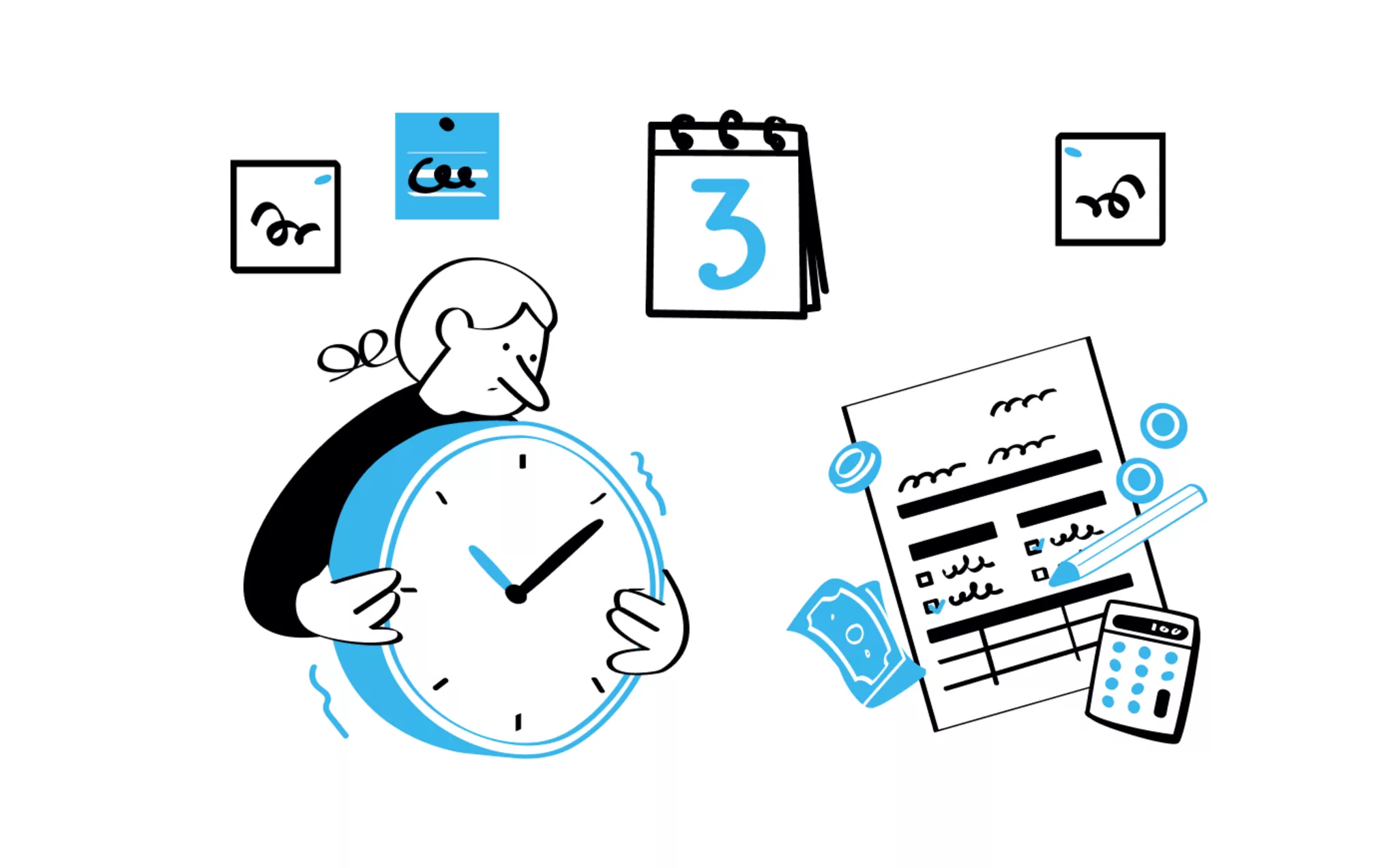
Time Tracking is Not a Control Tool – It's Real Money
Most teams still see timesheets as something managers use to check what’s been done.
In reality, time data shows you something far more valuable:
- how profitable projects really are
- where money leaks before you notice
- which services are chronically underpriced
- how much senior time is wasted on junior tasks
- which clients cost more than they pay
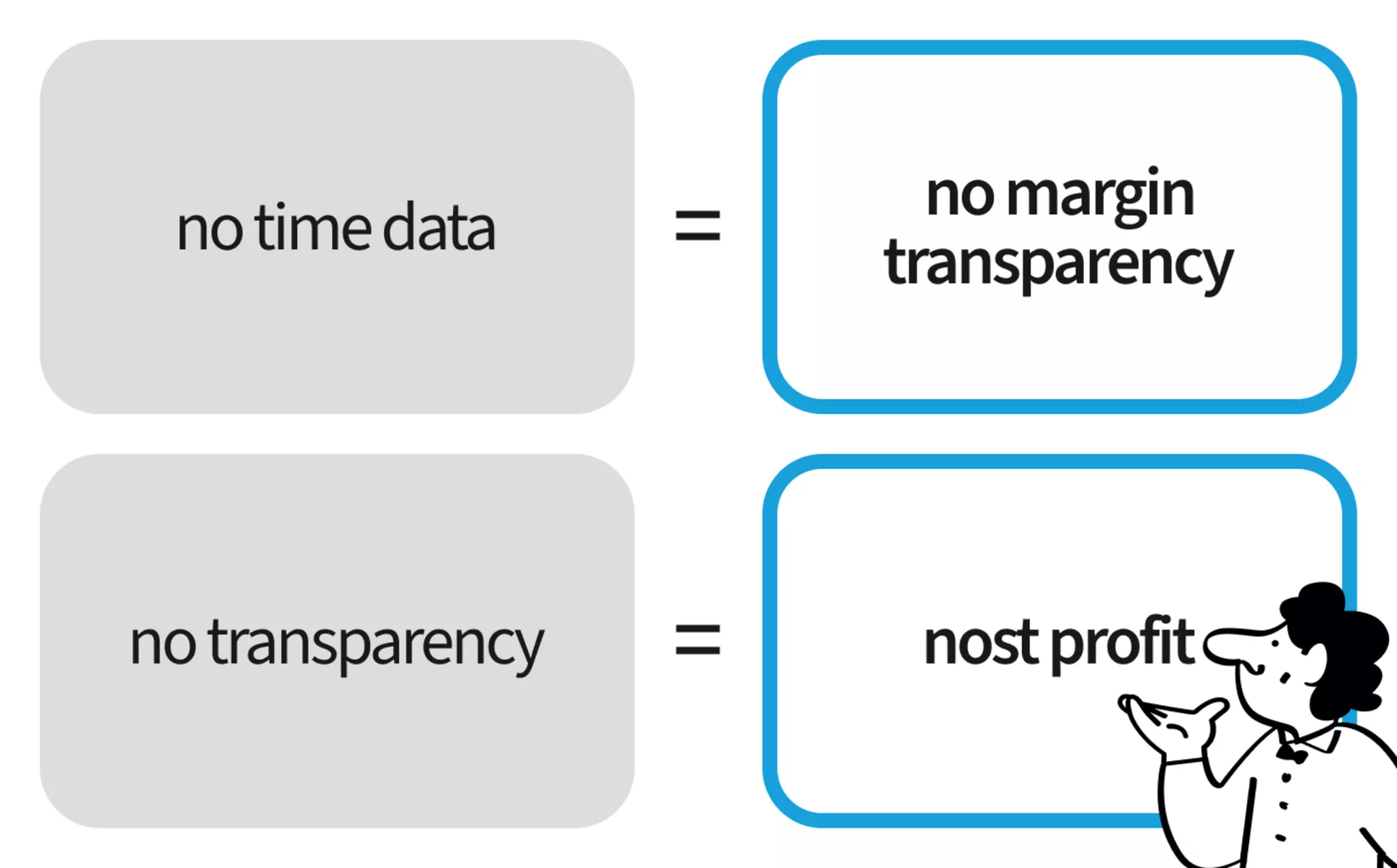
No time data = no margin transparency.
No transparency = less profit.
No transparency = less profit.
It's not about micromanagement.
It's about not leaving money on the table.
It's about not leaving money on the table.
Why Missing Time Data is So Costly
Consultancies rarely fail because of bad delivery — they fail because they can’t see their numbers clearly enough to act.
Without precise time tracking:
- quotes are mere guesses
- project budgets drift
- scope creep goes unnoticed
- staffing decisions are made too late
- client profitability is based on gut feeling
- the team works reactively instead of proactively
You're flying blind.
And when the CFO asks:
“Where did last quarter's margin go?”
…you might have a hunch, but no data.
“Where did last quarter's margin go?”
…you might have a hunch, but no data.
Bild Projektzeiterfassung-Marge konnte nicht geladen werden!
A Simple Example: “Just” 30 Minutes Missing Each Day
Imagine a consultancy with:
- 30 consultants
- An average billable rate of £120 per hour
- Around 220 working days per year
- and each person forgets to log 30 minutes daily (0.5 hours)
Step 1 – Missing Hours Per Day
0.5 hours × 30 consultants = 15 hours per day
Step 2 – Value of These Hours Per Day
Step 2 – Value of These Hours Per Day
15 hours × £120 = £1,800 per day
Step 3 – Value of These Hours Per Year
Step 3 – Value of These Hours Per Year
£1,800 × 220 working days = £396,000 per year

What This Means
So in this perfectly normal-sized consultancy, “only” half an hour missing per consultant per day quietly wipes out £396,000 of potential revenue per year.
This Equates To
- the salary of several new hires
- or the entire profit of a business unit
- or the buffer that makes the difference between “comfortable” and “crisis”
How to Integrate Time Intelligence into Daily Work
Practical, no-nonsense tips — the MOCO way.
1. Define Clear Service Categories (and Stick to Them)
Teams often log their time correctly – but in categories that are too vague.
Tip:
Create a simple, standardised service structure, e.g.:
Create a simple, standardised service structure, e.g.:
- Strategy
- Concept
- Design
- Development
- Project Management
- QA / Review
- Meetings
The goal:
Make time entries consistent so your data is comparable across clients and projects.
Make time entries consistent so your data is comparable across clients and projects.
No data consistency = no Time Intelligence.
2. Set a “Same-Day Logging” Rule (and Explain Why)
The biggest margin leaks occur from hours logged late or not at all.
Tip:
Clearly communicate the expectation:
Time is logged daily – before leaving or closing the laptop.
Clearly communicate the expectation:
Time is logged daily – before leaving or closing the laptop.
And not as a control measure, but as self-protection: “Every unlogged hour reduces the margin of your own work.”
3. Use Budget Alerts Before It’s Too Late
Most consultancies find out they’ve overrun a budget when the project is already finished.
Tip:
Watch thresholds: 50%, 75%, 90%.
Watch thresholds: 50%, 75%, 90%.
This gives project leads time to adjust scopes, realign expectations, or renegotiate.
Budget control shouldn’t be a retrospective activity.
4. Make Utilisation Transparent for Everyone
Utilisation isn’t something leadership should hoard. Teams make better decisions when they see their workload.
Tip:
Share weekly insights:
Share weekly insights:
- who is overloaded
- who has capacity
- which deadlines are tight
- which roles cause bottlenecks
Transparency reduces firefighting — and supports healthier, more profitable staffing decisions.
5. Review Past Delivery Effort Before Writing Every Proposal
One of the easiest ways to lose money? Basing offers on optimistic memories.
Tip:
Before pricing, review:
Before pricing, review:
- how long similar projects took
- which deliverables were regularly exceeded
- which seniority mix was profitable
This is where Time Intelligence shows its real value: cold, hard delivery reality > warm, optimistic instincts
6. Run a Margin Retrospective Once a Month
No workshop. No fuss. 30 minutes is enough.
Topics:
- biggest write-offs
- most profitable projects
- overruns per service type
- seniority mix
- costs per client
- hours logged after budget exhaustion
This is where patterns emerge — and patterns are where profit hides.
7. Make Time Tracking Fit the Flow — and Make It Enjoyable
If logging time feels like chasing tasks across five tools or fighting a complex ERP, your team simply won’t do it. And honestly, who can blame them?
Time tracking only works when it’s:
- integrated into the workflow (calendar, browser, mobile)
- immediately understandable
- lightweight rather than overloaded
- consistent across projects
- pleasant and intuitive
Because here’s the truth:
Teams don’t avoid time tracking because they don’t care — they avoid it because most tools make it painful.
Teams don’t avoid time tracking because they don’t care — they avoid it because most tools make it painful.
Make it seamless, fast, and (dare we say) a little enjoyable, and suddenly the data becomes accurate — and the margins follow.
Time Intelligence Isn’t More Work — It’s Smarter Work
The path to better margins isn’t complicated.
It starts with:
It starts with:
- clear service types
- consistent logging
- visible budgets
- data-driven pricing
- clear roles
- simple tools
- regular reviews
Do these well and time tracking stops being a burden — and becomes one of your most powerful strategic assets.
Because at the end of the day:
It’s not the big decisions that make or break consulting profitability.
It’s the small, untracked hours that quietly disappear.
It’s the small, untracked hours that quietly disappear.
And Time Intelligence is how you stop losing them.
Want to see how time tracking works in MOCO?
It’s quicker than making a cuppa — and far better for your margins. We’ve put together a hands on guide for consultancies and agencies. You can find it on our blog.
Time tracking that's fun. It works.