Article from
12 Tips for Better Communication in Agencies – with Slack.
We all know the scenario. It's often said that those who work in communication struggle to communicate effectively internally. This is frequently due to company culture, but the communication tools used are also crucial. An internal email overload tends to cause frustration rather than improve communication. Long meetings can be tiresome and time-consuming. Shouting across an open-plan office isn't always the best solution either.
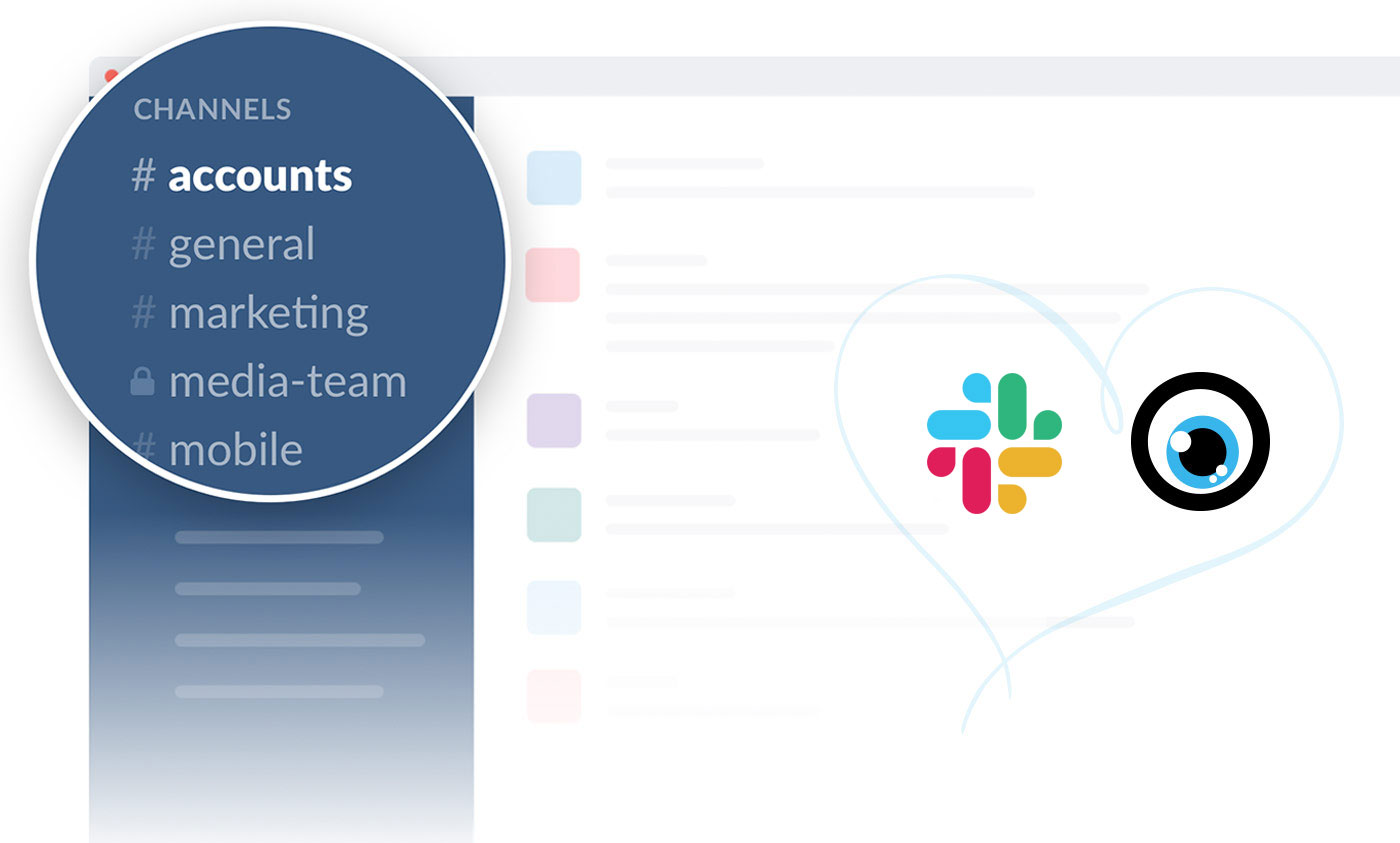
This is where Slack as a communication platform for businesses comes into play. A survey of Slack users showed that introducing a team chat can reduce internal email volume by half and meetings by a quarter. At the same time, productivity and transparency are significantly increased. The term 'chat' is quite an understatement when it comes to Slack. Compared to something like Skype, the software offers a whole new dimension of added value – and it integrates beautifully with MOCO via Zapier (see point 12).
 (English image not yet available)
Why agencies should take a closer look at "this Slack":
1. Flexible working hours without losing information
Whether on the go, working from home, or in the office – Slack allows for easy and quick communication and file sharing. Slack is a web application available for desktop, tablet, and smartphone.
Example: As a part-time employee or when working from home, you can quickly respond to brief queries and suggestions as if you were on-site. Delays typical of emails or phone calls are thus reduced.
Example: As a part-time employee or when working from home, you can quickly respond to brief queries and suggestions as if you were on-site. Delays typical of emails or phone calls are thus reduced.
2. Share news, tips & ideas
A message in Slack can be a targeted contribution for an entire team or company.
Example: In a channel (a kind of group set up for all or certain users) – let's call it "Kunterbunt" – the best articles and tips are shared. Simply copy-paste the link of an interesting article, and a Slack-generated article preview encourages other team members to check it out. Comments and emoticons can be used to comment as needed. A great way for employees to engage in entertaining self-education.
Example: In a channel (a kind of group set up for all or certain users) – let's call it "Kunterbunt" – the best articles and tips are shared. Simply copy-paste the link of an interesting article, and a Slack-generated article preview encourages other team members to check it out. Comments and emoticons can be used to comment as needed. A great way for employees to engage in entertaining self-education.
3. Brainstorming for pitches
All agency employees can organize themselves in channels by projects or topics and collaborate efficiently. The history ensures all information is retained and traceable.
Slack is excellent for brainstorming pitches. Ideas can be collected in a dedicated channel, scribbles/screenshots/links posted, and short montages made accessible to all involved.
Ultimately selected ideas can be marked with a star and displayed collectively if needed.
Slack is excellent for brainstorming pitches. Ideas can be collected in a dedicated channel, scribbles/screenshots/links posted, and short montages made accessible to all involved.
Ultimately selected ideas can be marked with a star and displayed collectively if needed.
4. Collaborate efficiently on projects
Short communication is invaluable in managing and executing tasks. Brief queries, suggestions, and feedback ensure a satisfying collaboration overall. Especially when this doesn't occur in one-on-one chats but is centrally accessible and traceable for all project participants – in the appropriate channel.
With intelligent search, uploaded files and information can be found at any time. Slack indexes PDFs, Word files, Google Docs, etc. There is also a central file and message archive.
This makes it easy not only for existing but also for new team members. They can learn about past activities through the history. Unlike emails, all information is visible/searchable for the new team member.
With intelligent search, uploaded files and information can be found at any time. Slack indexes PDFs, Word files, Google Docs, etc. There is also a central file and message archive.
This makes it easy not only for existing but also for new team members. They can learn about past activities through the history. Unlike emails, all information is visible/searchable for the new team member.
5. Foster team spirit
If a team has its own channel for internal exchange, it can foster a good relationship. Regular contact in unconventional ways allows for valuable contributions and quick requests for help.
6. Personal exchange
A "private" chat or video call is, of course, possible. This allows two people to exchange directly without others reading along.
7. Channels for topics like HR or finance
For topics like HR or finance, a single channel can be set up. Only those with access can leave information or send targeted messages to specific people with an @Name...
8. Quickly organize small events
It's easy to create a channel for organizing an event at short notice. Quick exchanges, information for the whole team, and files – everything is traceable in a history.
9. Available or not available?
Once someone is online and has Slack open, it is indicated by a green dot next to their name. You can then assume a timely response will follow.
Relatively new to Slack is the status feature. With an emoticon + text, an employee can indicate if they are on the go, at the doctor, or on holiday.
Example: Particularly useful if an employee frequently works remotely or from home.
Relatively new to Slack is the status feature. With an emoticon + text, an employee can indicate if they are on the go, at the doctor, or on holiday.
Example: Particularly useful if an employee frequently works remotely or from home.
10. Slack is fun
Not to be forgotten: fun is a prerequisite for enjoying using software. The user interface in Slack doesn't feel like work, desktop notifications are unobtrusive, and the app can be minimized or closed at any time to focus on a project.
11. Cool helpers
- Reminders
Type /remind me TOPIC XY follow-up 05/30 in Slack, and Slack will remind you of TOPIC XY on May 30th. Slack confirms the newly set reminder upon entry. All existing reminders can be viewed centrally. Reminders can also be set for others. - To-Do List
The reminder function can also be used for a to-do list. Capture to-dos as reminders and call up the list with /remind list. You can then tick off to-dos with a click on Complete and delete them with Delete.
More options for to-do lists in Slack - Replace smaller update meetings with Slack
Instead of the whole team physically meeting for an update, it's worth trying this via Slack. For example, enter: /remind #marketing-team to share weekly project updates on Mondays at 10 am. This instructs the Slackbot to remind the marketing team every Monday at 10 am to report on their current project status. - Record meeting notes in Slack
Two things are important for meeting notes: they must be available to all involved and must be retrievable later. Otherwise, they are more or less for the bin. Slack offers a good solution here. Notes can be recorded with a "Post". It's a document in Slack that team members can add to after it's shared.
12. Integration - including with MOCO
In addition to normal chat functions, Slack offers numerous integrations with third-party systems like Asana, Google Drive, Github. MOCO can be directly connected via the API with programming knowledge – or without programming knowledge via Zapier.
Using Slack with MOCO, an agency can receive automatic notifications for certain events in MOCO. This is especially useful if additional information is desired alongside the existing email notifications from MOCO.
Using Slack with MOCO, an agency can receive automatic notifications for certain events in MOCO. This is especially useful if additional information is desired alongside the existing email notifications from MOCO.
- Notification when an invoice is created
For example, the accounting department can be specifically informed as soon as an invoice is created by the project manager. If invoices are sent centrally, this can happen without delay. - Notification for acquisition activities
With information on won projects, specific employees can be informed. A general sales channel is also conceivable, where all acquisition activities can be tracked. - Notification for selected project budget statuses
Information on a project's budget status can be automatically posted to a Slack channel. This can be helpful if, in addition to the project manager, the management also wants to be informed.
Besides the mentioned possibilities, there are other options like the relatively new voice and video call.
Conclusion:
Even if Slack doesn't improve communication overnight – when used well and consistently, it ideally supports everyday work.
If you want to try Slack, you must be willing to embrace something new and then experiment and gain experience. Gradually cover new use cases and try out features.
Our team also uses Slack, and we can't imagine working without it today. Since we often work remotely and flexibly, it has become THE communication tool for us.
If you want to try Slack, you must be willing to embrace something new and then experiment and gain experience. Gradually cover new use cases and try out features.
Our team also uses Slack, and we can't imagine working without it today. Since we often work remotely and flexibly, it has become THE communication tool for us.