Article from
Fit for 2026: The only Q4 Playbook Consultancies will need
Q4 is not just the quarter for wrapping up reports. For consulting firms, it is the decisive period to sell and extend projects for next year. Clients are finalising budgets now, and if you wait until January to chase renewals or new work, you risk beginning 2026 with gaps in both utilisation and revenue.
The market context is encouraging but selective. The MCA forecasts +7.8% growth for consulting in 2026, with exports outside Europe up by 5%. Demand is strong in digital, AI, cyber, and transformation services. At the same time, benchmarks show average billable utilisation hovering around 69%—enough to survive, but not enough to thrive if the pipeline runs dry.
The key is simple: use Q4 to secure next year with a practical scorecard that combines metrics and actions.
The Q4 Scorecard with Actions
1. Utilisation – keep visibility high
Why this is important
With early visibility, firms avoid costly bench time, keep teams motivated, and maximise revenue without burning people out.
What you should measure
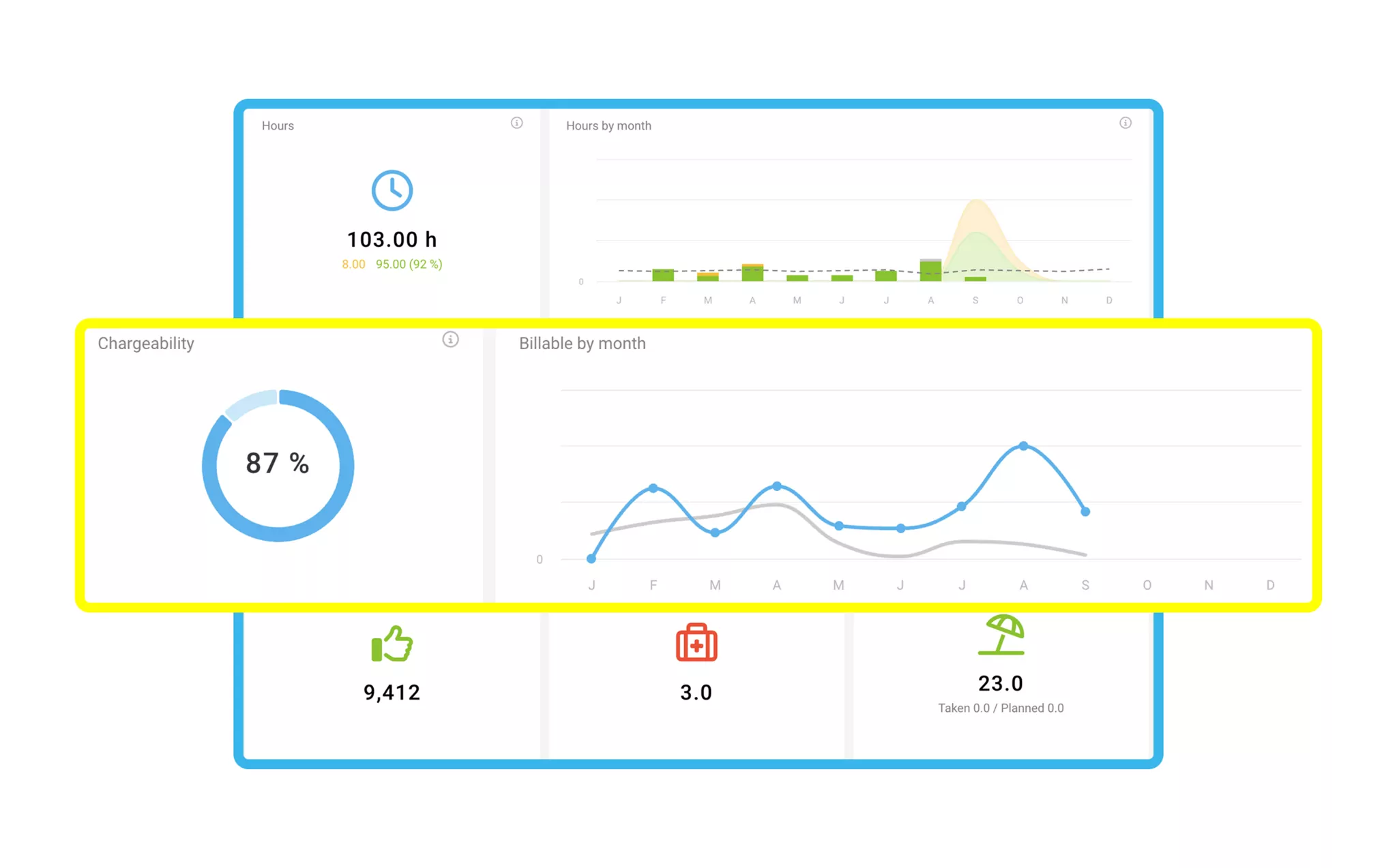
Billable vs non-billable time, both for individuals and across the firm. Partners will naturally spend more time on business development, juniors more on client delivery—that’s normal.
What to do
Make utilisation visible each week and act quickly when someone is underloaded. In a good ERP system, consultants log their time directly against projects, and managers can see how individuals and teams are tracking against their utilisation goals. This makes it easier to adjust staffing before gaps appear.
With early visibility, firms avoid costly bench time, keep teams motivated, and maximise revenue without burning people out.
What you should measure
Billable vs non-billable time, both for individuals and across the firm. Partners will naturally spend more time on business development, juniors more on client delivery—that’s normal.
What to do
Make utilisation visible each week and act quickly when someone is underloaded. In a good ERP system, consultants log their time directly against projects, and managers can see how individuals and teams are tracking against their utilisation goals. This makes it easier to adjust staffing before gaps appear.
2. Pipeline and Leads – renew, extend, and track renewals
Why this is important
A renewal secured in Q4 is worth double: it protects utilisation and revenue in early 2026, and it frees consultants from starting the year chasing deals instead of delivering value.
What you should measure
Weighted pipeline coverage for H1 2026 (target: ≥1.2×) and—most importantly—the share of current projects already renewed or extended into 2026.
What to do
Push consultants at every level to approach clients proactively. Tracking renewals must be a weekly discipline—too often, consultants assume extensions will happen automatically, only to find contracts lapse at year-end. Make renewal conversations part of every client interaction in Q4. Alongside that, refresh master agreements and ensure the pipeline has enough depth for the first half of the year. If your weighted coverage is below the target, double down on lead generation. A reliable ERP system helps by showing clearly what work is already secured, renewed, or still at risk—so there are no surprises in January.
A renewal secured in Q4 is worth double: it protects utilisation and revenue in early 2026, and it frees consultants from starting the year chasing deals instead of delivering value.
What you should measure
Weighted pipeline coverage for H1 2026 (target: ≥1.2×) and—most importantly—the share of current projects already renewed or extended into 2026.
What to do
Push consultants at every level to approach clients proactively. Tracking renewals must be a weekly discipline—too often, consultants assume extensions will happen automatically, only to find contracts lapse at year-end. Make renewal conversations part of every client interaction in Q4. Alongside that, refresh master agreements and ensure the pipeline has enough depth for the first half of the year. If your weighted coverage is below the target, double down on lead generation. A reliable ERP system helps by showing clearly what work is already secured, renewed, or still at risk—so there are no surprises in January.
3. Finance and Cash – know what’s really coming in and going out
Why this is important
Cash clarity reduces risk—firms can take on new projects or invest in talent without fearing a liquidity crunch.
What you should measure
Revenue forecast (secured vs expected projects), open client invoices, and open supplier or freelancer invoices.
What to do
Use a straightforward finance report to see whether the start of 2026 will be cash-positive. A good ERP system brings together outgoing and incoming invoices alongside the revenue forecast, so leadership teams have one clear view of the firm’s financial position. This clarity helps you decide whether to accelerate collections, delay outflows, or adjust spending.
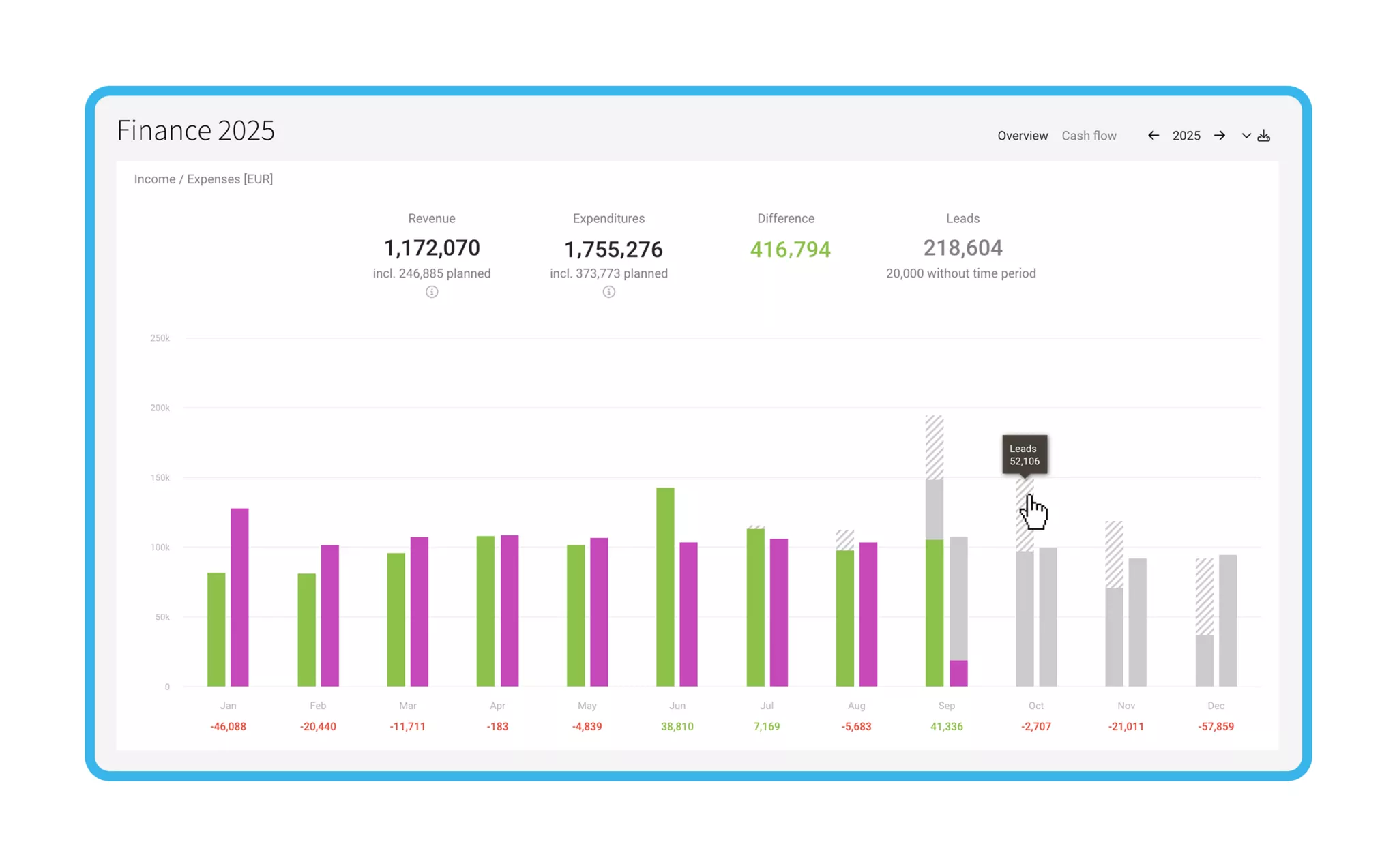
Cash clarity reduces risk—firms can take on new projects or invest in talent without fearing a liquidity crunch.
What you should measure
Revenue forecast (secured vs expected projects), open client invoices, and open supplier or freelancer invoices.
What to do
Use a straightforward finance report to see whether the start of 2026 will be cash-positive. A good ERP system brings together outgoing and incoming invoices alongside the revenue forecast, so leadership teams have one clear view of the firm’s financial position. This clarity helps you decide whether to accelerate collections, delay outflows, or adjust spending.
4. Capacity and Skills – Close the Bench Before It Forms
Why this is important
By “closing the bench before it opens,” you secure revenue, keep morale high, and start 2026 running instead of scrambling to fill empty schedules.
What you should measure
The bigger risk for consulting firms is not missing skills, but starting the year with consultants on the bench.
What to do
Use Q4 to match people to renewed projects early and make sure extensions are staffed before the holidays. Keep 10–20% flexible capacity in reserve to handle peaks, but avoid overcommitting without confirmed demand. Seniority balance is industry hygiene—you only need to confirm it aligns with the type of work secured.
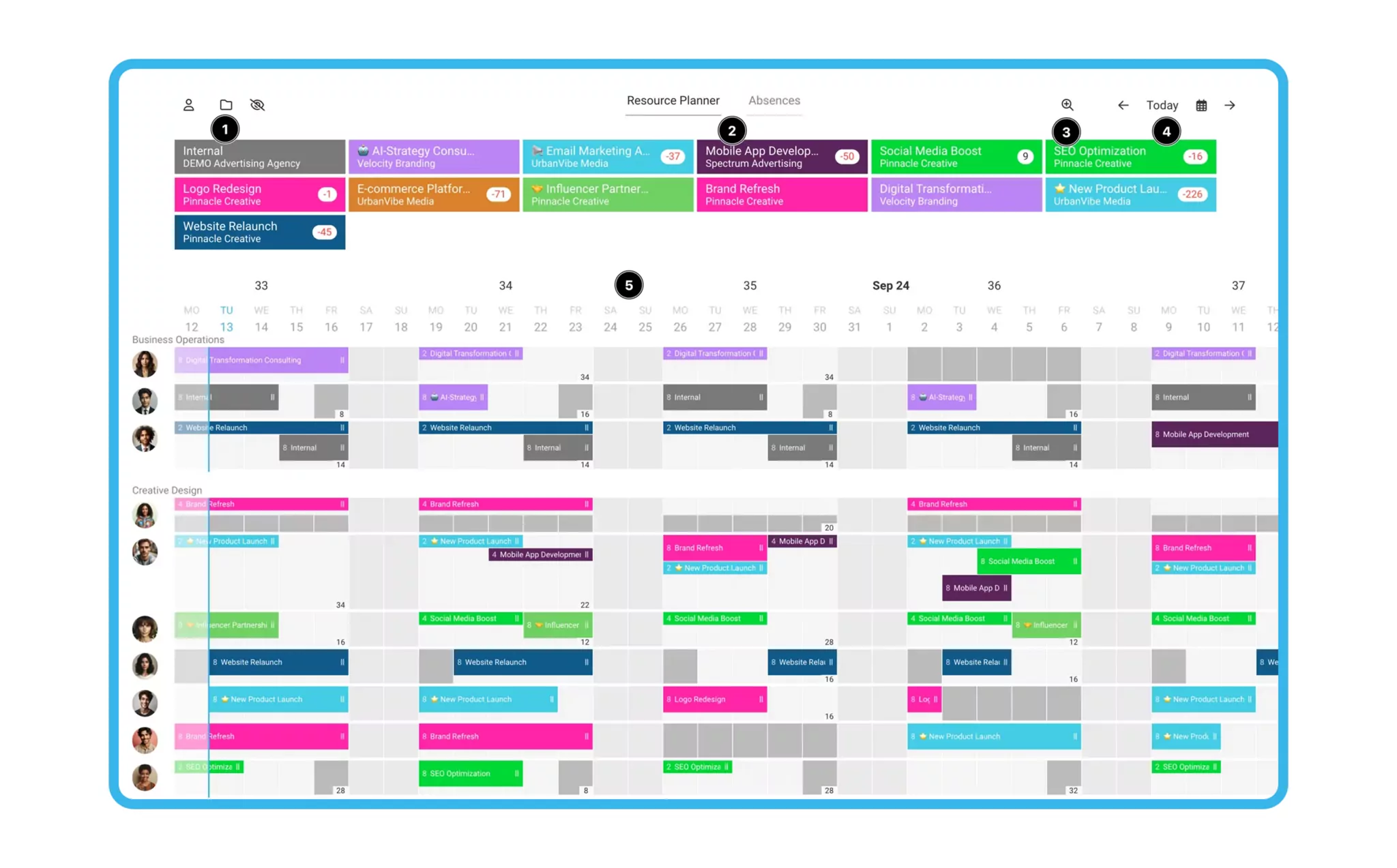
By “closing the bench before it opens,” you secure revenue, keep morale high, and start 2026 running instead of scrambling to fill empty schedules.
What you should measure
The bigger risk for consulting firms is not missing skills, but starting the year with consultants on the bench.
What to do
Use Q4 to match people to renewed projects early and make sure extensions are staffed before the holidays. Keep 10–20% flexible capacity in reserve to handle peaks, but avoid overcommitting without confirmed demand. Seniority balance is industry hygiene—you only need to confirm it aligns with the type of work secured.
Closing Word
Consulting demand is shifting, not vanishing. The firms that will thrive in 2026 are those that secure renewals early, keep their pipeline full, and maintain clear financial visibility. Q4 is your window to make it happen.
With a simple scorecard that links metrics to actions—and with an ERP system that gives you a transparent view of utilisation, pipeline, and finance at both team and individual level—you can walk into January with confidence instead of uncertainty.
Keep it simple. Sell early. Stay visible.
With a simple scorecard that links metrics to actions—and with an ERP system that gives you a transparent view of utilisation, pipeline, and finance at both team and individual level—you can walk into January with confidence instead of uncertainty.
Keep it simple. Sell early. Stay visible.
MOCO: The ERP Software for Consultancies
MOCO is one of the most popular ERP systems for consulting firms in the DACH region, trusted by more than 7,000 companies. The philosophy is simple: less is more. Instead of juggling Excel sheets, disconnected tools, or outdated software, MOCO focuses on the essentials—clear structure, strong performance, and intuitive workflows that feel intuitive for every employee.
Key features include:
Time Tracking and Project Controlling to keep projects under control from first contact to invoice.
Lead Management and Revenue Forecast to ensure visibility on pipeline and growth.
Capacity Planning and Personnel Management for resource allocation.
Digital Invoice Entry, Expense Reimbursement, and Liquidity Planning for financial clarity.
With concise reports available in real time, MOCO helps consulting firms make informed decisions, improve team satisfaction, and keep project business in sight.
“MOCO is truly the best thing that could have happened to us! I never thought we would say that using ERP software is fun.”
— Dominik Blaschke, pit-con GmbH, Business Consulting, Münster
— Dominik Blaschke, pit-con GmbH, Business Consulting, Münster